

The Golden Age of Coachbuilding: When a Body Was Tailored Like a Suit
There was a time when ordering a car resembled commissioning evening wear. The carrozzerie designed bodies as fashion houses designed garments — for a client, for an occasion, for a style.
-
Touring Superleggera introduced the superleggera approach: ultra-light, hand-formed aluminum panels stretched over a tubular frame. Legend has it that upon delivery of one such car, the client caressed the fender so long he requested an identical “crease” on the opposite side — proof that craftsmanship could inspire symmetry even through imperfection.
-
Bentley Mulliner spent decades designing interiors like private studies — caskets of marquetry and picnic tables in miniature. In its contemporary form, it draws on Riverwood, timber thousands of years old — a material whose biography outlives entire model lines.
It was an era when a car did not have a body. It wore one.
The British School of Patience: Ash, Brush, and Celestial Fibres
-
Morgan Motor Company continues to build around an ash frame. In Cheltenham they say you can tell a good violinist by the way he holds his chisel — for both the violin and the Morgan frame speak the same language of grain.
-
In Goodwood, a Rolls-Royce coachline is painted in a single motion — one master, one brush, no masking tape. Occasionally he asks for the car to be moved back a few inches — not to correct the line, but to complete the phrase.
-
The same house illuminated the Starlight Headliner with hundreds of fibre-optic points. Constellations are often personalized — recreating the night sky of an owner’s birth. Here, craftsmanship works in astronomy, not in accessories.
The Renaissance of the Restomod: Horology on Wheels
-
Singer Vehicle Design calls its 911s reimagined — for these are not restorations but reinterpretations. Vocabulary gives way to tolerance: panel gaps, stitch textures, the rhythm of perforation — all aligned with watchmaker precision.
-
Eagle E-Types embody the belief that the original E-Type deserved a version “as its engineers once imagined, before anyone counted the hours.” And indeed, there are thousands of hours in each.
-
ICON 4×4 and Lunaz reveal two poles: utilitarian luxury with nickel hardware and thick hide versus classics restored & remastered with electric powertrains. Two aesthetics, one denominator — manual control over every detail.
Bespoke Within the Manufacturer: The Atelier Inside the Factory
In the last two decades, OEMs have adopted the language of the atelier.
-
Porsche Exclusive Manufaktur, from match-to-sample colorwork to filigree interior finishes, operates like a tailor within the factory.
-
Q by Aston Martin blends embroidery, book-matched veneers, and precious metals, while JLR SV Bespoke finalizes configurations in rooms where material samples resemble a jeweller’s case.
-
Bugatti Sur Mesure hand-paints motifs that cannot be printed — calligraphy written in airbrush.
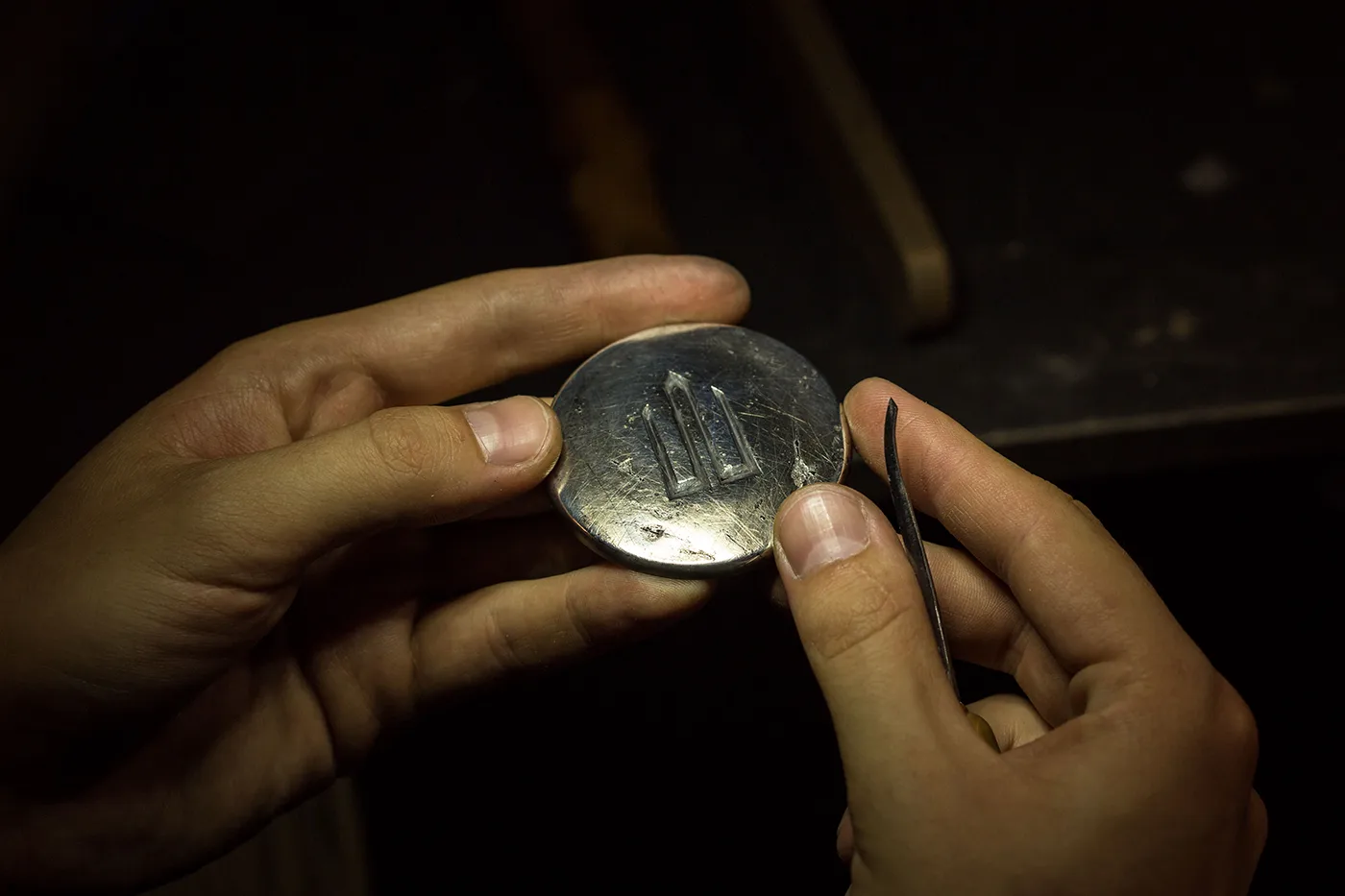
“At Carlex, every detail is deliberate — shaped by craft, guided by purpose, and built with responsibility.”
Materials That Grow More Beautiful With Time
True craftsmanship avoids effects made to dazzle once. It seeks materials that develop patina.
-
Pagani speaks of “engineering jewellery”: bolts as micro-sculptures, Carbo-Titanium as a composite that can only be understood by touch.
-
Bentley Bacalar again turns to Riverwood — timber that remembers an age before motoring itself.
From Our Own Practice
Allow us a discreet note from our own practice.
At Carlex Design, we work gladly with solid wood — even in places rarely associated with it, such as vehicle floors. We seek uncommon species that carry their own stories: timber from stonewood formations, natural burls, richly grained woods that can be stained in-depth to reveal exceptional tones.
We also craft with hand-patinated leather — a technique borrowed from haute leatherwork and horology, translated into automotive form. Where a car’s surface meets light, we apply layered lacquers — including those infused with fine diamond dust, creating a spatial play of reflections. This is our proprietary technology, constantly refined and evolved.
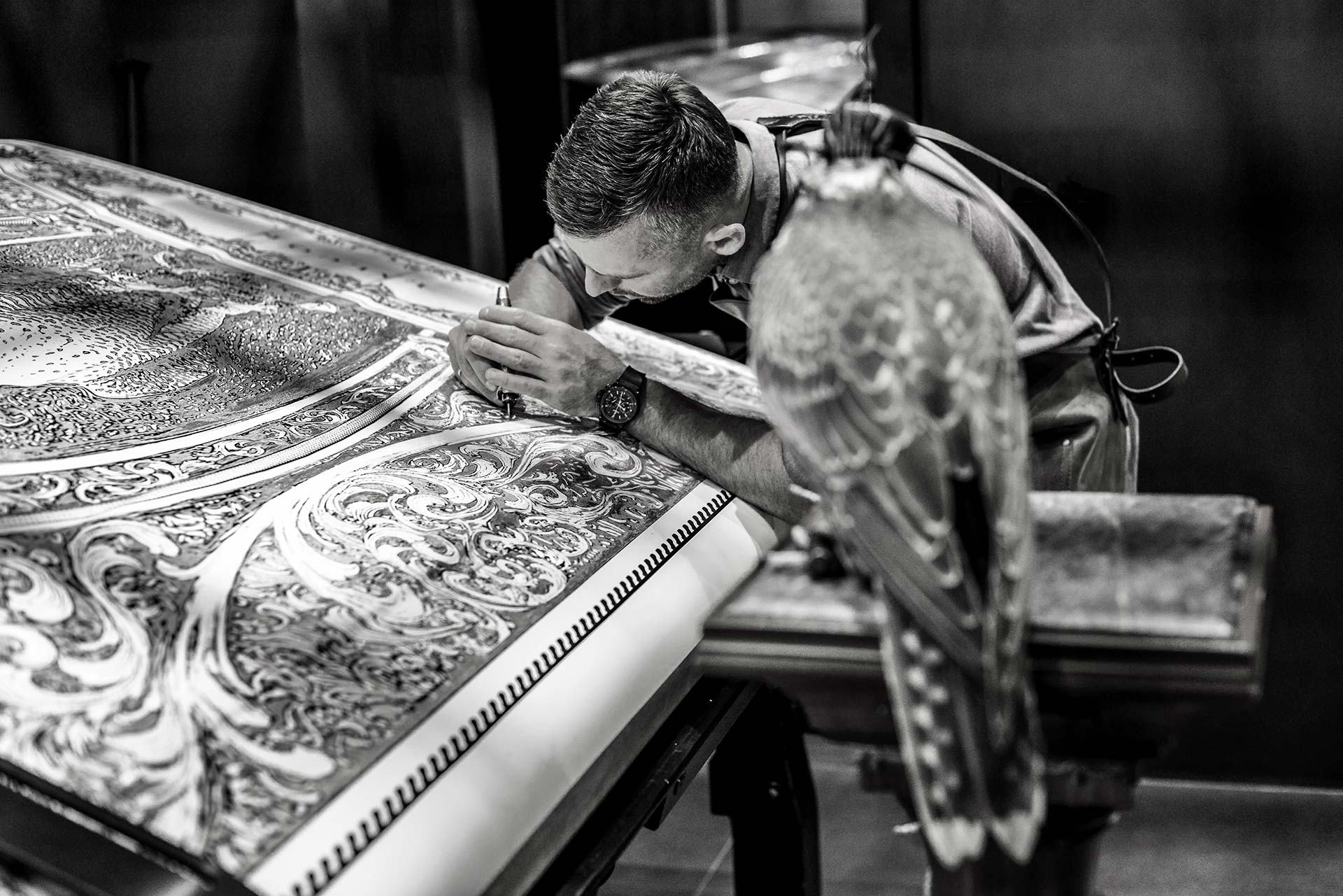
In certain projects, we bring a jeweller’s scale to the bodywork itself: hand engraving, details in silver or gold, components finished with the precision of a watch movement. These are our conscious dialogues with the masters of the past — the same artisans mentioned above — and a natural continuation of their philosophy in the modern world.
Our ambition is to build a true House of Automotive Craftsmanship, in its most authentic and elevated form.

Carlex Himalaya precious leather.
Five Brief Anecdotes That Explain the Meaning of a Craftsman’s Hand
- Brush, Not Laser (Rolls-Royce) – a coachline born of the wrist, not a plotter. One craftsman, one responsibility.
- Ash as Frame (Morgan) – wood becomes the “spring” of the structure, absorbing vibration differently than steel; knowledge from workshops, not CAD files.
- Panel-Beating (Touring Superleggera) – form emerging from within; the rhythm of the hammer is the metronome of shape.
- Constellations to Order (Rolls-Royce) – stars on the headliner that map memories, not mere decoration.
- Restomod as Historical Correction (Singer / Eagle) – craftsmanship repairing not faults, but the compromises of mass production.
The Story Continues
The history of grand coachbuilding does not end in the past. Tools, processes, and materials have changed — yet the essence remains: to create things that carry the trace of human hand and mind.
The ateliers of old sculpted metal and wood with the same focus that today’s workshops apply to fibres, hides, and pigments. Craftsmanship knows no era — only those who can see the world through the lens of detail.
In this tradition works Carlex Design — not as an imitator, but as a modern House of Automotive Craftsmanship. Within its workshops, engineers, jewellers, leather artisans, and artists meet. They gather fragments of nature and culture: rare woods, fossilised structures, minerals, even fragments of meteorite — all to give each car its own character, story, and emotional timbre.
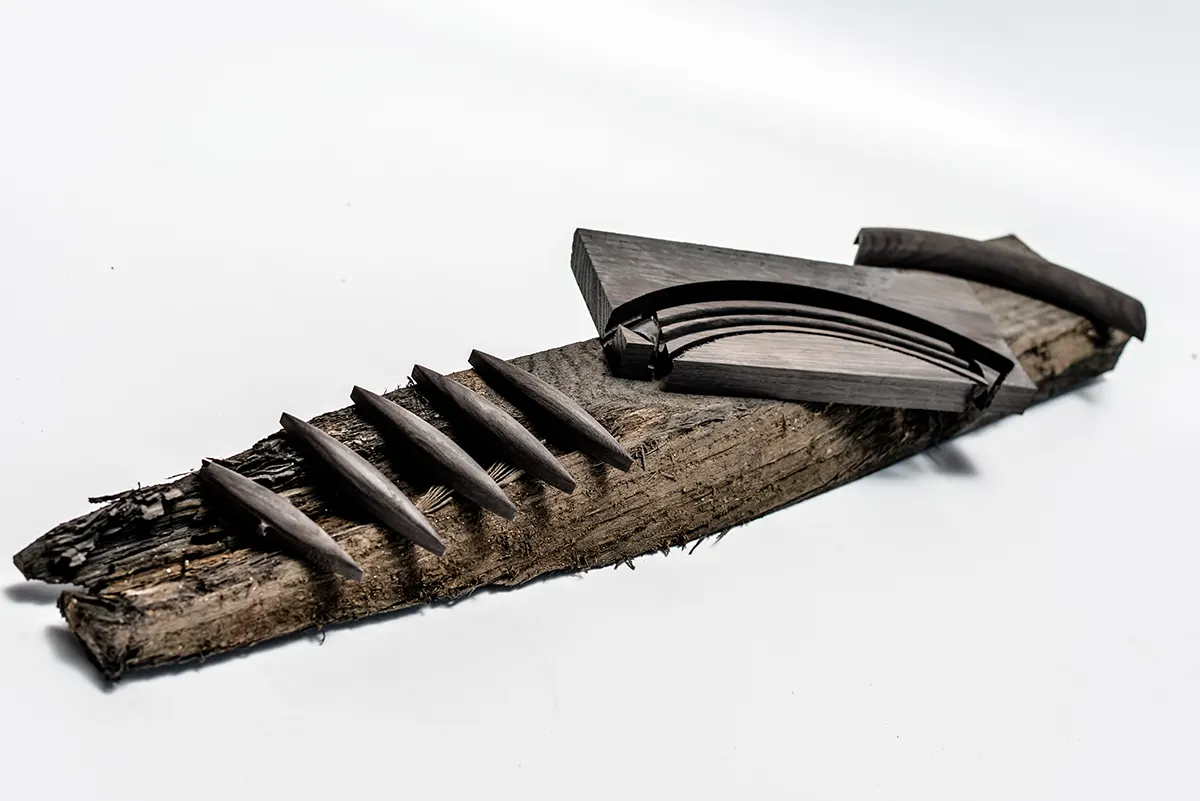
Discovering the most beautiful and rarest species of wood that form the heart and soul of our projects.
Carlex evolves as the great coachbuilders once did: through dialogue with material, through relationships with local craftsmen, through humility before the process.
It is this awareness — that motoring can be a form of applied art — which keeps the human hand at the centre of every project.
In that sense, Carlex does not seek to repeat the past. It continues its meaning — creating cars to be not only admired, but remembered. Cars that speak not of the moment, but of the enduring presence of human craftsmanship in an age that would hasten everything.